


Choosing the right commercial laundry equipment distributor can make or break your operation. The wrong partner leaves you with unreliable machines, poor support, and wasted money.
At Oasis Laundry, we’ve seen businesses struggle because they didn’t know what to look for when selecting equipment or a distributor. This guide walks you through the essential factors that matter.
Understanding Commercial Laundry Equipment Types
Front-Load and Top-Load Washers
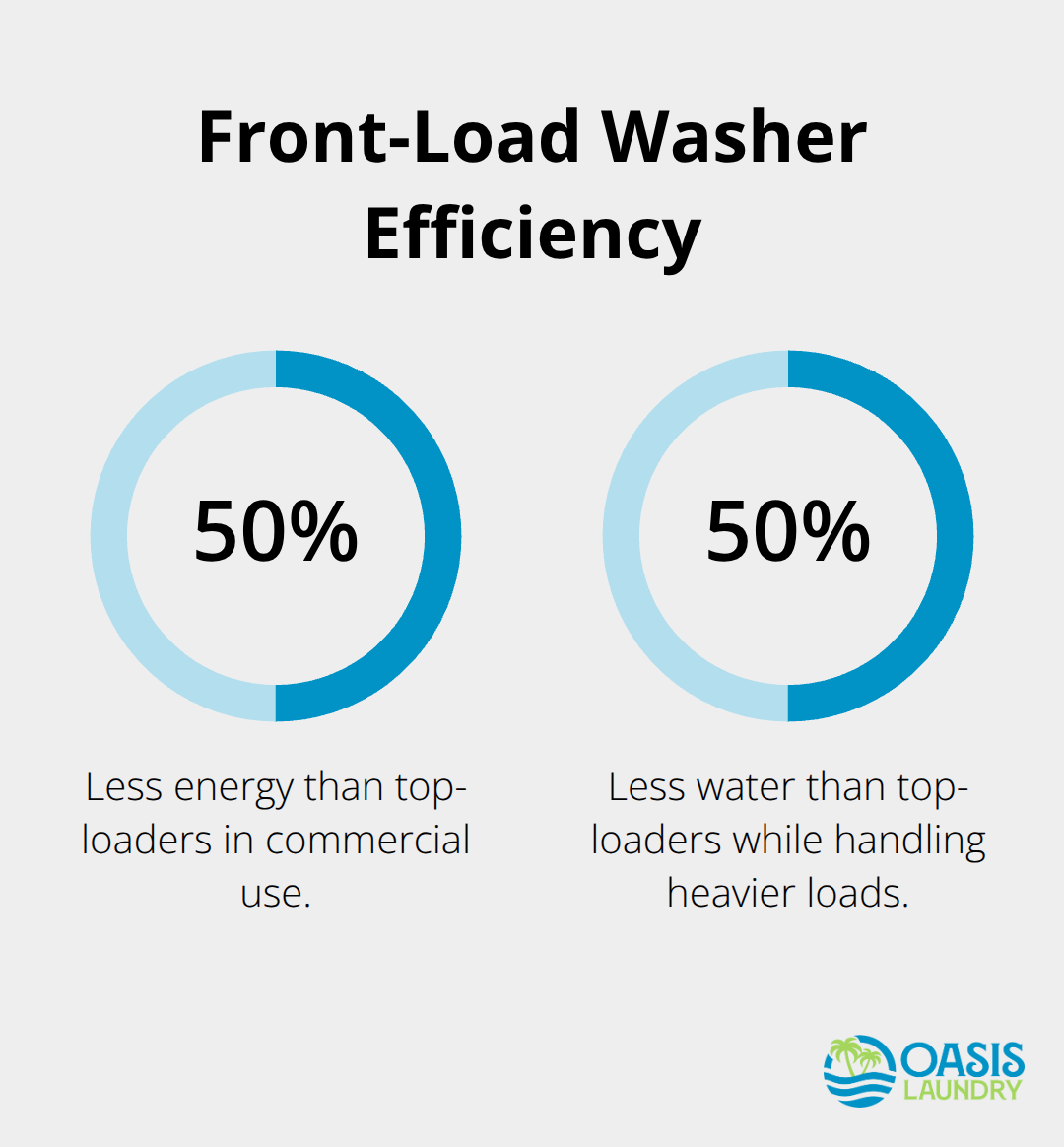
Commercial laundry equipment falls into three main categories, and your operation’s workflow determines the right mix. Front-load washers dominate commercial settings because they use about 50% less energy and water than top-loaders while handling heavier loads-typically 50 to 100 pounds per cycle. Laundromats, multi-housing facilities, and hotel operations benefit from front-loaders that deliver faster turnaround times and lower utility costs. Top-load washers still serve smaller operations or facilities that prioritize simplicity, but they consume more resources and operate slower. Washer capacity matters more than most operators realize: undersizing for peak demand creates bottlenecks that kill profitability. Hotels processing hundreds of pounds of linens daily need 40 to 100-pound capacity machines, while apartment complexes benefit from stackable units that save floor space without sacrificing throughput.
Speed Queen and Maytag represent the industry standard for commercial washers, offering programmable cycles, stainless steel drums rated for 10 to 15 years of heavy use, and parts availability that prevents extended downtime.
Dryers and Moisture Control
Dryers and finishing equipment deserve equal attention because they often become the bottleneck in commercial operations. Gas dryers are more economical to operate in the long run and cost less to operate over time, though they require proper venting and gas line infrastructure. Tumble dryers with moisture sensors stop automatically when clothes reach target dryness, preventing over-drying that damages fabrics and wastes energy. For high-volume operations, stack dryers double your capacity in the same footprint. Pressing and folding equipment ranges from simple hand-operated presses to fully automated systems, but most small to mid-size operators skip automation here and focus budget on reliable washers and dryers instead.

Selecting Pressing and Folding Solutions
Labor for pressing and folding often costs less than the equipment itself unless you process thousands of pounds weekly. What matters most is selecting equipment from distributors who stock common parts locally and maintain technicians with recognized certifications (such as Alliance Laundry Systems University training). A distributor covering your region with 24/7 emergency support prevents the catastrophic revenue loss that occurs when machines sit broken for days. The right equipment partnership starts with understanding these three categories and recognizing that your distributor’s service capabilities matter as much as the machines themselves.
Finding a Distributor Who Actually Backs Their Machines
Your distributor choice determines whether you get machines that run reliably for 10 years or equipment that becomes a constant headache within 24 months. Most operators focus on price alone and regret it later when they face repair delays, unavailable parts, or poor installation. The distributor you select should function as a business partner, not just an equipment seller.
Demand a Site Evaluation Before Purchase
Start by demanding that any potential distributor conduct a comprehensive site evaluation before you buy anything. This evaluation covers water pressure, gas BTU delivery, electrical panel capacity, drainage systems, venting requirements, and floor space layout. A distributor investing 100 or more hours in site analysis, design, and guidance typically justifies higher upfront costs through better equipment performance and smoother operations. You gain nothing from a low price if the machines cannot operate properly in your space.
Verify Local Service Capabilities
Ask how many technicians they employ locally, whether they stock common parts on-site, and what their average repair response time actually is. Speed Queen and Maytag equipment means nothing if your distributor takes three days to send someone when a machine breaks. Coin-O-Matic, for example, operates across Illinois, Indiana, Michigan, and Wisconsin with local service capabilities and technical expertise, offering 24/7 emergency support that prevents catastrophic downtime. Service availability and technical expertise separate legitimate distributors from transactional sellers.
Check References and Installation Quality
Request references from current customers and ask specifically about their experience during equipment failures. Verify that your distributor carries recognized certifications and maintains relationships with equipment manufacturers rather than selling whatever machines generate the highest margin. The distributor’s installation quality directly affects machine longevity and efficiency, so confirm they handle electrical, plumbing, and gas connections properly rather than outsourcing to unqualified contractors.
Evaluate Financing Transparency and Territory Coverage
Equipment financing should be transparent with no hidden costs, and many distributors offer equipment financing terms and transparency with flexible repayment schedules based on loan size. Territory coverage matters too-verify they serve your geographic area and can support future expansion if your operation grows. Avoid distributors who cannot answer detailed questions about your specific workflow, utility infrastructure, or peak demand periods.
Prioritize Long-Term Partnership Over Quick Sales
A distributor who turns down sales that don’t fit your best interests, communicates transparently about competitor inquiries, and prioritizes long-term partnership over quick commissions becomes an invaluable asset to your business. This commitment to your success shapes how they approach equipment selection, installation, and ongoing support. With the right distributor in place, you can now focus on buying commercial laundry machines that drive profitability and operational efficiency.
What Specifications Actually Matter for Your Operation
Size Your Equipment for Peak Demand, Not Average Days
Capacity decisions start with operational reality, not wishful thinking. Measure your current daily pounds processed and forecast demand for the next three to five years, then size equipment for peak periods, not average loads. If your laundromat processes 500 pounds on a slow Tuesday but 1,200 pounds on Saturday, you need machines that handle Saturday volume without creating bottlenecks that frustrate customers and kill revenue. Hotels processing linens require 40 to 100-pound capacity machines to move volume quickly; apartment complexes benefit from stackable units that fit tight spaces; laundromats need a mix of sizes because customers arrive with varying load volumes. Undersizing by even 20 percent compounds into lost revenue that multiplies monthly.
Invest in Energy Efficiency and Faster Cycle Times
Energy Star-rated washers use 45 percent less water than standard models, and that difference accumulates into thousands of dollars annually in large operations. Front-load machines with high-G extraction spin moisture out more aggressively, allowing dryers to finish loads faster and reducing overall cycle time by 15 to 25 minutes per load. This matters because faster throughput means fewer machines needed to handle the same volume, directly improving your return on investment. Gas dryers cost less to operate than electric models over their lifespan, though they demand proper venting infrastructure that your distributor must verify during site evaluation.
Stock Parts Locally and Verify Service Access
Spare parts availability separates reliable operations from constant frustration. Ask your distributor specifically which parts they stock locally and lead times for items they must order. Speed Queen and Maytag equipment means nothing if a bearing replacement requires three weeks because your distributor lacks inventory.

Distributors serving multiple states with nationwide parts shipping capability ensure you can source components quickly even in remote locations. Service access directly impacts maintenance costs: machines requiring panel removal or hose disconnection for basic repairs waste technician time and inflate labor bills.
Choose Commercial-Grade Components Over Residential Equipment
Stainless steel drums rated for 10 to 15 years of heavy use outlast cheaper alternatives significantly, and commercial-grade components designed for daily operation differ fundamentally from residential equipment marketed as commercial-style. Your distributor should explain why they selected specific brands based on durability, parts availability, and warranty coverage rather than margin. Moisture sensors on dryers prevent over-drying that damages fabrics and wastes energy, while programmable controls allow you to adjust cycles for different fabric types without manual intervention. Remote monitoring systems provide detailed reports on machine usage, energy consumption, and maintenance needs, enabling preventive maintenance that extends equipment life and prevents revenue loss.
Final Thoughts
Selecting the right commercial laundry equipment distributor determines whether your operation thrives or struggles with constant breakdowns and wasted money. Capacity sized for peak demand, energy-efficient machines that lower utility costs, and equipment built from commercial-grade components designed for years of heavy use all matter significantly. But specifications alone mean nothing without a distributor who backs their machines with local service, stocked parts, and genuine commitment to your success.
Your distributor should function as a business partner, not a transactional seller. They conduct site evaluations before installation, employ certified technicians who respond quickly to emergencies, and maintain transparent pricing without hidden costs. They answer detailed questions about your workflow, utility infrastructure, and growth plans, turning down sales that don’t fit your needs and prioritizing your long-term profitability over quick commissions. Territory coverage matters too-verify they serve your geographic area and can support expansion as your business grows.
Start by demanding a comprehensive site evaluation from any potential commercial laundry equipment distributor. Ask specific questions about their technician count, parts inventory, and average repair response time, then request references from current customers and verify installation quality. We at Oasis Laundry understand that commercial laundry operations require reliable equipment and dependable support, which is why we offer tailored services and solutions designed for your specific needs.