

The laundry industry is shifting fast in 2026. Three major forces are reshaping how services operate: sustainability demands, customer expectations for convenience, and automation technology.
At Oasis Laundry, we’re watching these laundry service trends for 2026 closely because they directly impact how we serve you. This post breaks down what’s changing and why it matters for your business or home.
Sustainability Matters More Than Ever in Laundry
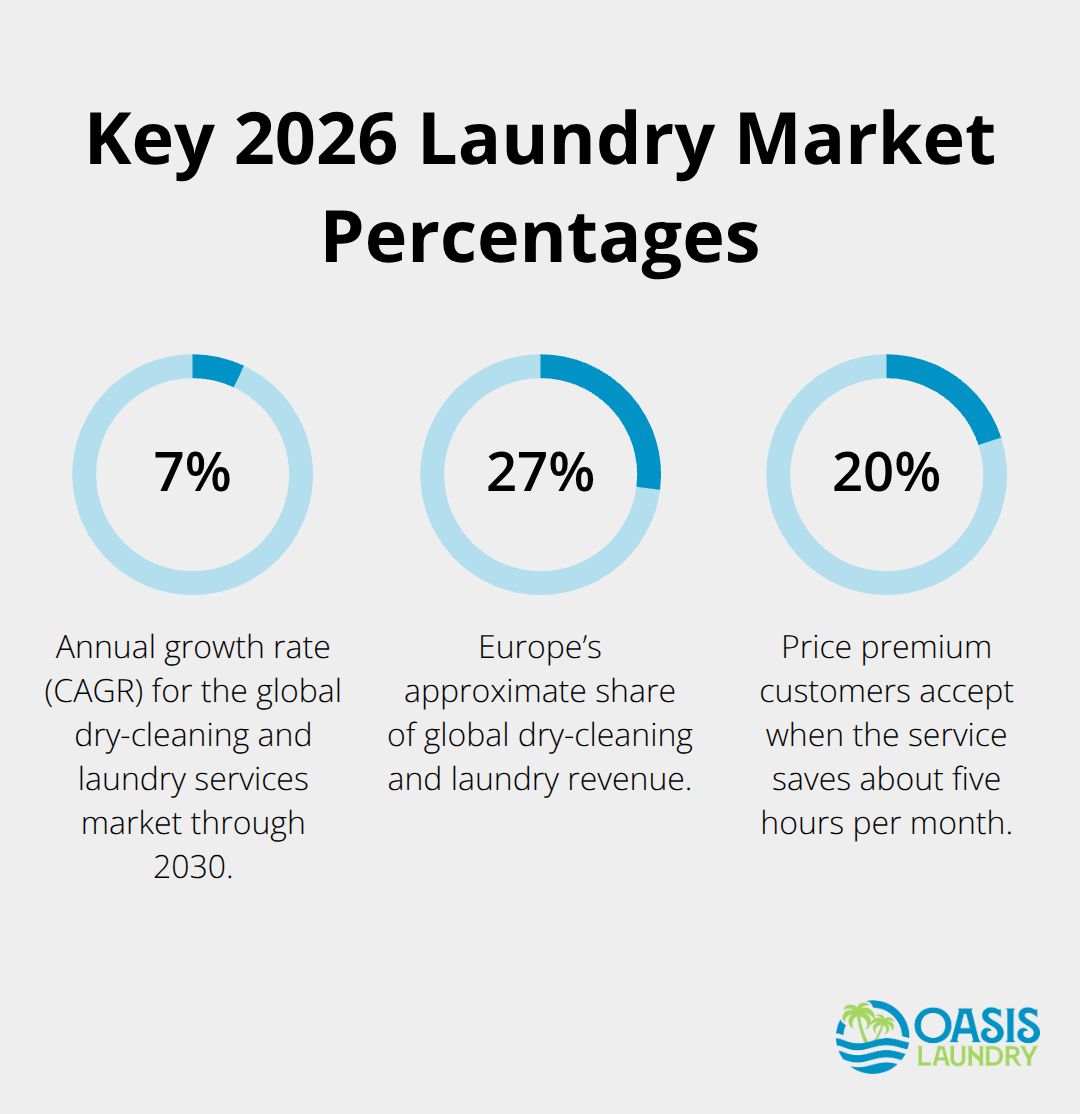
Sustainability has stopped being a marketing angle-it has become a business requirement. The global dry-cleaning and laundry services market reached USD 78.20 billion in 2024 and will hit USD 118.71 billion by 2030, growing at 7.3% annually according to Grand View Research. What drives that growth? Customers increasingly demand eco-friendly operations. Europe accounts for 26.95% of global revenue, and sustainability focus defines that region’s market strength. This matters because laundry operations consume significant resources. Air-drying clothes can reduce the average household’s carbon footprint by a whopping 2,400 pounds a year.
That single statistic explains why equipment efficiency has become non-negotiable. Water and energy-efficient machines reduce your operating costs while benefiting the planet. Modern high-efficiency equipment saves approximately 31,938 gallons of water per unit annually and cuts utility costs by roughly USD 1,238 per year compared to older machines. Those numbers compound quickly across multiple units.
The Shift Toward Eco-Friendly Detergents
Consumers are shifting toward fragrance-free and eco-friendly detergents in 2026, rejecting products with harmful chemicals like phosphates, dyes, and synthetic fragrances that cause allergies and respiratory issues. Biodegradable detergents formulated without SLS/SLES compounds and animal ingredients now match conventional brands in price, removing cost as an excuse for older products. When selecting detergents, the EPA Safer Choice program and EWG Guide to Healthy Cleaning provide credible standards that customers recognize and trust.
Carbon-Neutral Delivery Becomes the Standard
Carbon-neutral delivery options are becoming standard across the industry, not optional. Grand View Research data confirms that post-pandemic hygiene concerns and fabric-care trust boost professional service adoption, with sustainability as a core differentiator. Customers will choose providers who prove environmental commitment through verifiable practices, not vague claims. This shift creates an opportunity for services that integrate sustainable delivery methods into their operations from the start.
On-Demand and Convenience-Focused Services Reshape Customer Expectations
Convenience has moved from a nice-to-have to the baseline expectation. Consumers increasingly favor on-demand, home pickup and delivery with mobile app booking, driving convenience-driven growth in 2026. This isn’t theoretical-it’s reshaping which services win customers and which ones lose them. The shift is absolute: services without pickup and delivery options become uncompetitive. Customers no longer accept dropping off laundry themselves or waiting days for results.
Same-Day and Next-Day Service Sets the New Standard
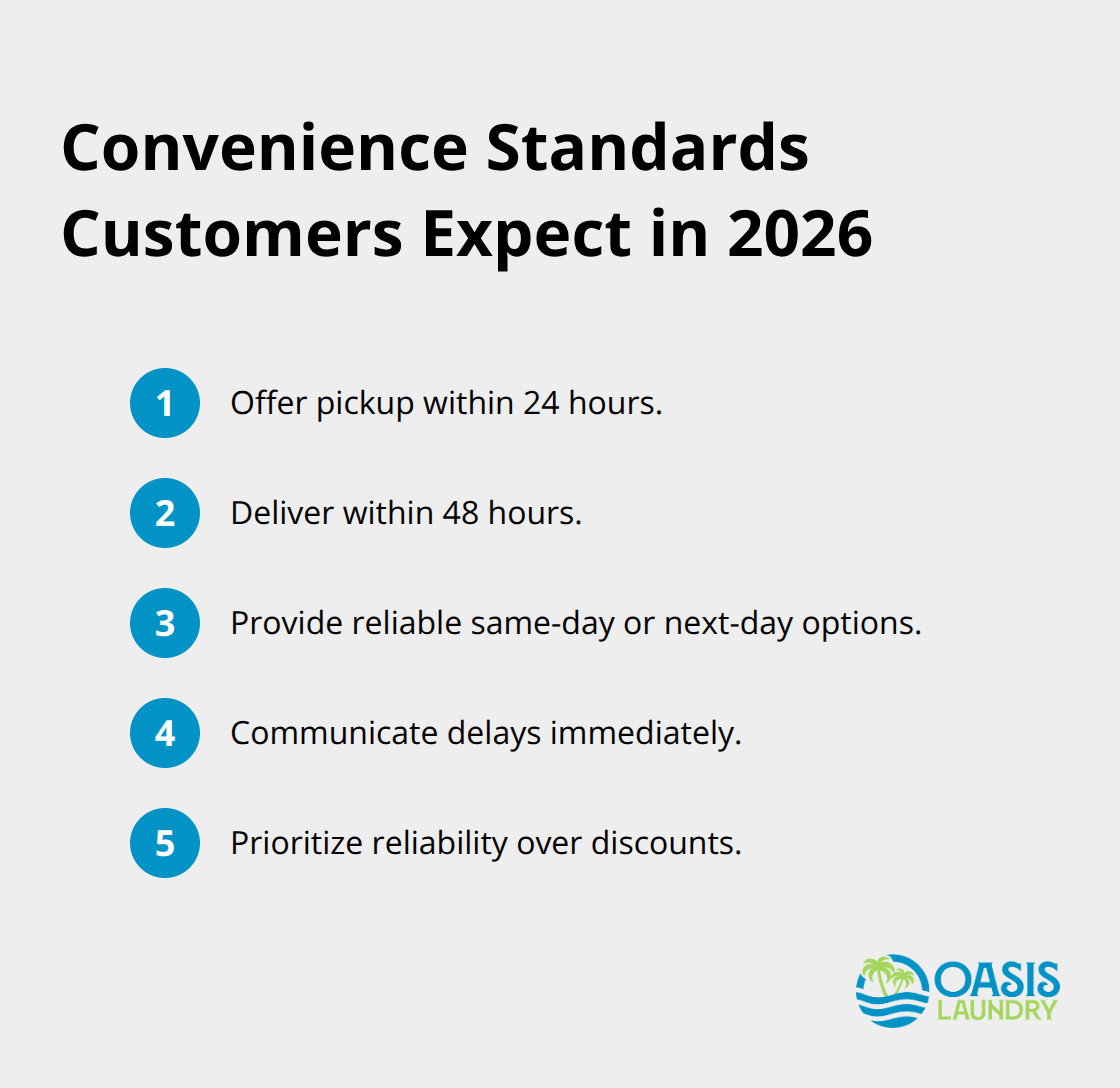
Same-day or next-day service has stopped being a premium offering and started being the standard that customers expect. The laundry market is no longer split between fast and slow services-it’s split between those who offer speed and those who lose customers. Speed matters more than ever, but speed without reliability destroys trust. Services that promise same-day delivery but miss deadlines create frustration that no discount fixes. The competitive pressure is real: if your service doesn’t offer pickup within 24 hours and delivery within 48 hours, customers will find one that does.
Mobile Apps and Real-Time Tracking Transform Operations
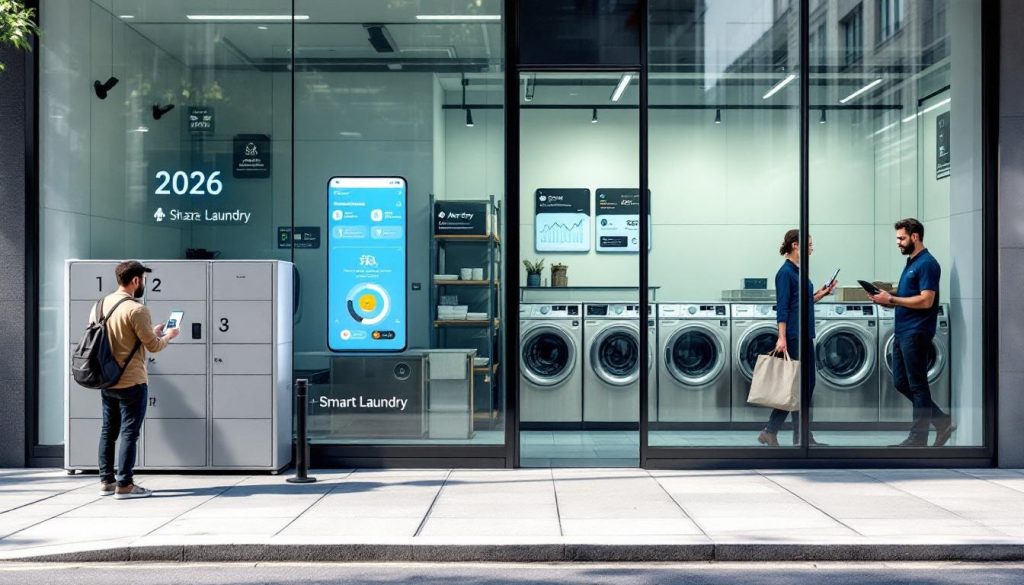
Mobile app integration with real-time tracking has become table stakes. Residents expect to start machines from their phones, receive cycle notifications, and check usage history without friction. Payment systems like PayRange and Laundroworks have improved reliability and support significantly, making app-based mobile payments the default for new installations in 2026. This matters because app-based systems generate better revenue tracking and data insights compared with coin-only operations. Property managers and business owners who rely on coin systems fall behind operationally and financially.
Execution Determines Winners in a Speed-Focused Market
The winners in 2026 aren’t the largest laundry services-they’re the ones who execute consistently on their promises. This forces operational excellence. You need systems that prevent bottlenecks, track every garment accurately, and communicate delays immediately. Pickup and delivery expansion accelerates because customers value time above price. A service charging 20% more but saving five hours per month wins. Businesses treating laundry as a commodity lose ground to those offering seamless integration into customer routines.
The laundry industry’s trajectory is clear: easier, faster, and more connected machines win. Upgrade decisions should account for this reality now, not later, because delaying increases pressure from customers and staff expecting better technology and faster turnaround. These convenience demands create the foundation for the next major shift reshaping the industry: automation and technology that powers these faster, smarter operations.
Automation and Technology Transform Operations
Smart Machines Deliver Real Profit Gains
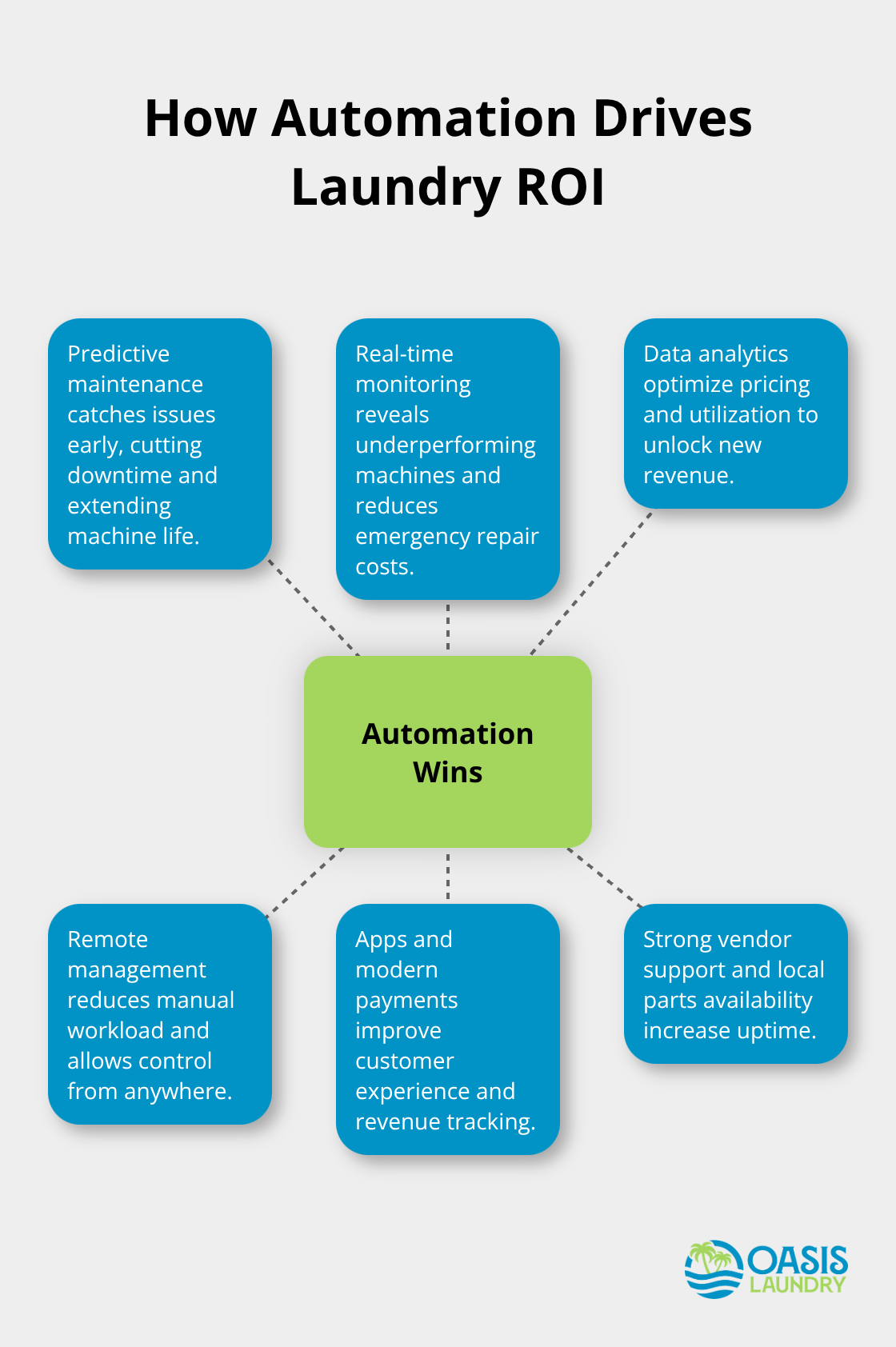
Automation in laundry operations has moved past flashy features and into practical profit generation. LG Electronics now offers AI-enabled commercial laundry machines with 60-minute cycles and app-based monitoring, reflecting the industry push toward faster, data-driven operations according to Grand View Research. These aren’t luxury upgrades-they’re operational necessities that directly reduce labor costs and increase throughput. Smart machines connected through IoT monitoring catch problems before they become expensive failures. Predictive maintenance with built-in diagnostics and remote alerts flags issues before breakage occurs, reducing downtime and extending machine life significantly. Equipment vendors offering maintenance programs and local parts support are favored because they eliminate the guessing game around when to service machines.
Real-Time Monitoring Cuts Costs and Prevents Failures
Real-time performance monitoring helps operators optimize efficiency and reduces service calls by catching issues early, which means fewer emergency repairs eating into margins. Modern equipment includes touchscreen controls, QR code starts, and clearer instructions that reduce user errors and training time. Columbia University implemented Speed Queen laundry app for residence halls to provide real-time washer and dryer availability and cycle notifications, demonstrating how campus-scale on-demand solutions work in practice. This data visibility transforms operations: you know exactly which machines generate revenue, which ones underperform, and when maintenance is needed before failure occurs.
Data Analytics Reveal Hidden Revenue Opportunities
The competitive advantage belongs to operators who treat data as a business asset, not a byproduct. Analytics dashboards track revenue, utilization rates, and maintenance KPIs to reveal bottlenecks that manual oversight misses entirely. Time-of-day pricing and peak-hour adjustments optimize revenue opportunities without complex manual scheduling. Capacity planning becomes precise instead of reactive when you know demand patterns three weeks ahead. Inventory management improves because demand forecasting based on historical data prevents stockouts of detergents, supplies, and specialty items.
Remote Management Systems Eliminate Manual Workload
Services like ProCapture Smart Technology and Huebsch Command enable remote management and control of laundry operations from anywhere, cutting manual workload dramatically. The financial impact matters: modern equipment saves approximately 31,938 gallons of water annually per unit and reduces utility costs by roughly $1,238 per year compared to competing brands. Those savings compound across multiple locations. Equipment with Galaxy Controls provides revenue-enhancing features including upcharges for hot and warm water, customized cycle options for upsells, and dynamic pricing capabilities. The machines themselves handle the complexity while operators focus on growth.
Speed and Reliability Drive Customer Loyalty
Delaying technology adoption means leaving money on the table while competitors capture efficiency gains and customer loyalty through superior speed and reliability. Operators who invest in smart equipment and data systems now position themselves to meet the 2026 market’s demand for faster, more transparent service. The machines that connect to networks, report their status, and alert you to problems before they fail represent the operational standard that customers expect and that margins depend on.
Final Thoughts
The laundry service trends for 2026 point in one direction: businesses that combine sustainability, speed, and smart technology win. Those that don’t adapt lose customers to competitors who do. Sustainability isn’t a trend anymore-it’s the cost of entry that customers expect as standard, not premium add-ons.
Speed and convenience define competitive advantage in 2026, and services without same-day or next-day delivery, mobile app integration, and real-time tracking lose customers immediately. Technology transforms how you operate, not just what you offer, because real-time monitoring reveals revenue opportunities, predictive maintenance prevents costly failures, and remote management systems eliminate manual workload. Equipment that connects to networks and reports its status represents the operational standard customers expect.
The path forward requires action across three areas: invest in water and energy-efficient equipment, implement mobile payment and tracking systems, and adopt data analytics to optimize operations. We at Oasis Laundry understand these shifts because we live them daily, and we offer convenient, eco-friendly solutions with next-day delivery and sustainable practices that align with what customers expect in 2026.