


Running a laundry business means choosing equipment that works as hard as you do. Electrolux commercial laundry machines deliver the capacity and reliability that keeps operations moving without constant repairs or replacements.
At Oasis Laundry, we’ve seen firsthand how the right equipment transforms a business. This guide walks you through what makes commercial machines worth the investment and how to get the most from them.
What Sets Commercial Laundry Machines Apart
Commercial laundry machines operate in a completely different league from domestic equipment. Domestic washers handle 2–3 cycles per day and typically last 1–3 years, while commercial machines manage 10–20 cycles daily and run reliably for 8–10 years. This difference matters because commercial machines use industrial-grade components engineered for tens of thousands of cycles. A domestic machine simply cannot sustain this pace without constant breakdowns. Electrolux commercial washers come in capacities ranging from 6 kg to 35 kg, so you can match your equipment to actual business volume rather than forcing undersized machines to overwork. High-spin efficiency is another game-changer. Commercial machines extract significantly more water during the spin cycle, which directly reduces drying time and energy consumption downstream. This isn’t a minor convenience-faster extraction means your dryers work less, lowering electricity bills substantially. A domestic washer leaves fabrics wetter, forcing dryers to work harder and longer.
Water and Energy Efficiency That Actually Cuts Costs
Commercial machines eliminate the waste built into domestic washers. Domestic washers use more water per cycle and longer wash times regardless of load size, which inflates both water and electricity bills.
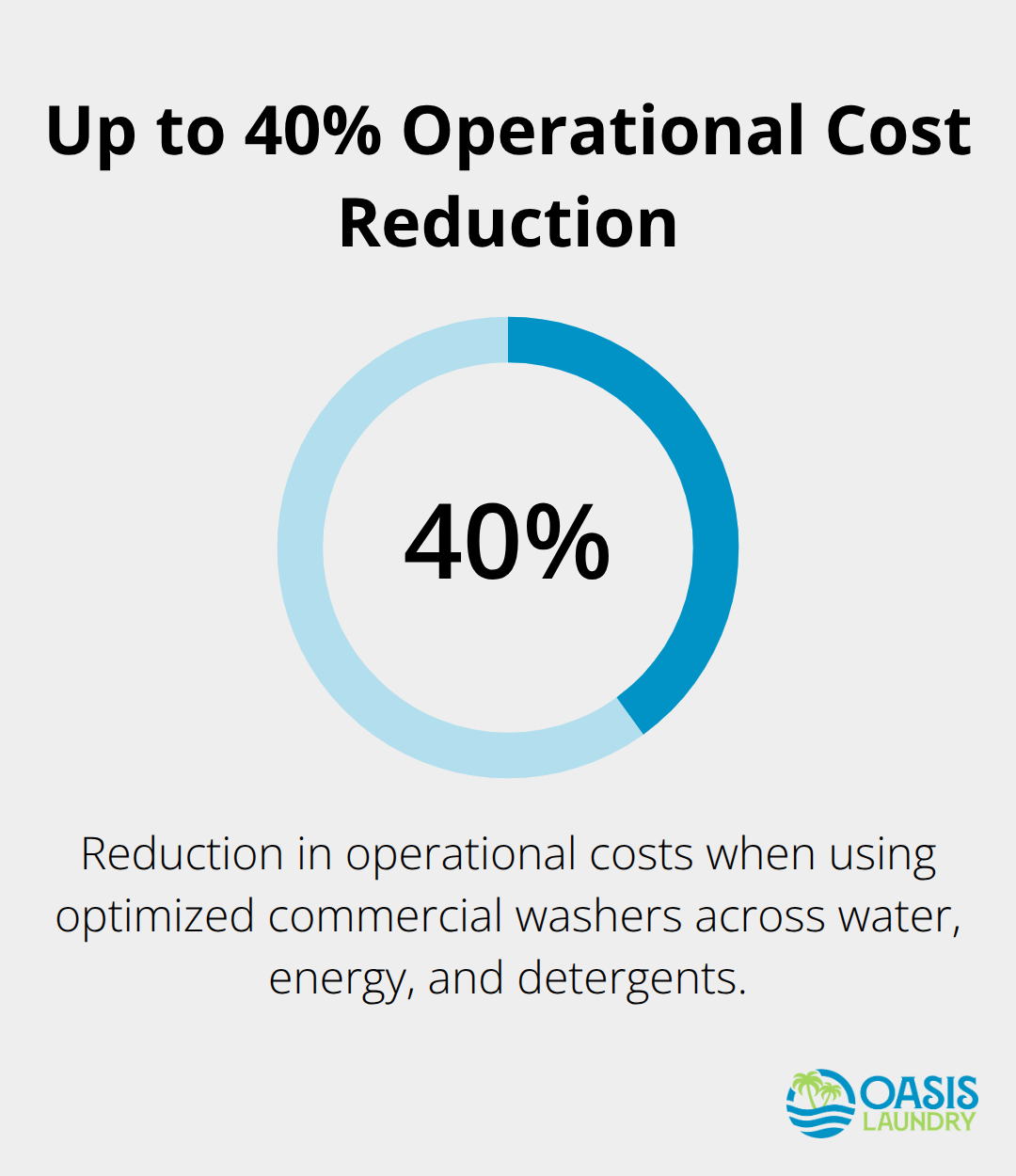
Electrolux Line 6000 washers feature Intelligent Dosing that adds precise detergent amounts based on actual load weight, eliminating chemical waste. The Integrated Savings feature prevents partial loading by displaying real-time load measurements, stopping operators from wasting water and energy on undersized batches. Real-world results show up to 40% reduction in operational costs across water, energy, and detergents when you use these optimized machines. For businesses running dozens of cycles weekly, this translates to thousands in annual savings. Independent verification proves these claims through trusted sources, not marketing hype.
Durability That Protects Your Investment
Stainless steel drums and heavy-duty frames withstand continuous commercial use without degradation. Domestic machines use cheaper materials that corrode and crack under heavy use. Commercial machines feature self-cleaning drums and accessible filters that reduce maintenance time and repair costs. This durability means lower downtime, which directly impacts your bottom line. A machine that fails during peak hours disrupts your entire operation and disappoints clients. Electrolux machines are built to minimize this risk through robust construction and design for serviceability. When maintenance is needed, parts are readily available and technicians can access them quickly. This reliability compounds over the 8–10 year lifespan, making the higher upfront cost irrelevant compared to replacing domestic machines every few years.
Why Operational Efficiency Matters for Your Bottom Line
The real advantage of commercial equipment emerges when you calculate total cost of ownership. A domestic machine costs less upfront but demands constant repairs, higher utility bills, and frequent replacement. Commercial machines demand higher initial investment yet deliver lower operating costs, minimal downtime, and years of consistent performance.

Businesses that switch from domestic to commercial equipment often recover their investment within 2–3 years through reduced energy and water consumption alone. The remaining 5–7 years of the machine’s lifespan represent pure savings. Your choice of equipment directly affects profitability, staff productivity, and client satisfaction. Selecting the right machine for your specific business needs requires understanding both your volume and your operational constraints.
Why Businesses Choose Commercial Equipment
The financial case for commercial laundry equipment is straightforward and measurable. Hotels running 200 rooms generate roughly 1,000 pounds of laundry daily, which demands machines capable of 15–20 cycles per day. A domestic machine cannot handle this volume without catastrophic failure. Implementing eco-friendly services using professional laundry equipment can lead to significant savings, cutting energy, water, and detergent costs. For a mid-sized hospitality business washing 500 pounds weekly, this translates to approximately 2,000–3,000 dollars in annual savings on utilities and chemicals alone.
Meeting Strict Industry Compliance Standards
Healthcare facilities face even stricter requirements than hospitality operations. Barrier washers prevent cross-contamination between contaminated and clean linens, a feature domestic machines completely lack. Hospitals cannot meet infection-control standards without equipment designed specifically for this purpose. Commercial washers also offer programmable disinfection cycles that reach temperatures and durations necessary for thermal disinfection, whereas domestic machines do not reliably achieve these standards. Bags containing contaminated laundry must be clearly identified with labels, color-coding, or other methods so that health-care workers handle them appropriately. Meeting these compliance requirements is not optional, making commercial equipment the only viable choice for regulated industries.
Eliminating Costly Downtime
Downtime directly damages revenue in ways many business owners underestimate. When a laundry machine fails during peak operations, restaurants cannot serve clean tablecloths, hotels cannot prepare rooms, and healthcare facilities cannot maintain patient care standards. Commercial machines built with industrial-grade components and stainless steel construction last 8–10 years compared to domestic machines lasting 1–3 years. Electrolux machines feature self-cleaning drums and accessible filters that reduce maintenance time significantly.
Accessing Reliable Parts and Service Networks
Parts availability represents another critical advantage that separates commercial equipment from domestic machines. Commercial equipment from established manufacturers has readily available spare parts and trained technicians across service networks, meaning repairs happen quickly rather than waiting weeks for obscure components. The higher upfront investment in commercial equipment pays for itself through eliminated emergency repairs, extended operational lifespan, and consistent performance that clients depend on. Businesses that calculate total cost of ownership rather than focusing on purchase price universally choose commercial equipment once they understand the long-term financial impact. Understanding your specific operational needs and volume requirements helps you select the right machine configuration for your business.
Getting the Right Machine and Workflow in Place
Match Capacity to Your Actual Volume
Selecting commercial laundry equipment requires matching machine capacity to your actual weekly volume, not guessing based on what feels reasonable. Calculate your total pounds of laundry per week, then divide by the number of operating days to find daily volume. A hotel with 150 rooms generates approximately 750 pounds of laundry daily, which demands machines capable of handling 15–20 cycles. Electrolux front-load washers range from 6 kg to 35 kg capacities, so you can build a lineup that processes your exact volume without oversizing or undersizing. Oversized machines waste water and energy on partial loads, while undersized machines create bottlenecks that force staff to work longer hours.
Once you know your volume, consider your space constraints and installation requirements. Electrolux offers flexible mounting options including Soft Mount for high-spin performance and Solid Mount for stability in tight spaces, so space limitations should never force you into inadequate equipment.
Design Your Physical Layout for Efficiency
Machine placement directly affects workflow efficiency. Position washers near your receiving area to minimize distance for soiled linens, then place dryers adjacent to washers so wet loads transfer quickly without cooling down. This layout reduces handling time and prevents moisture loss that forces dryers to work harder. Finishing equipment like ironers should sit downstream of dryers, creating a logical progression from wash to dry to finish. Poor placement forces staff to carry heavy wet loads across facilities, increasing injury risk and slowing throughput.
Ergonomic design matters significantly in commercial laundry operations. Electrolux Line 6000 washers with ClarusVibe control achieve ErgoCert 4-star rating, the only machines in the industry reaching this certification level. Research from ergonomic studies shows that proper equipment design reduces work-related musculoskeletal disorders and improves working conditions for staff. This translates directly to lower labor costs and higher staff retention, outcomes that compound across years of operation.
Train Staff on Equipment Operation
Staff training determines whether your equipment delivers promised efficiency or underperforms through operator error. The ClarusVibe control panel supports up to 34 languages and allows pre-programming of country-specific regulatory requirements, but staff must understand how to access and use these features. Assign one experienced team member to lead training on your specific machines, covering program selection, load sizing, and basic troubleshooting. This person becomes your internal expert who handles onboarding new hires and catches operational drift before it becomes expensive.

Establish Preventive Maintenance Schedules
Establish a maintenance schedule before equipment arrives, not after problems emerge. Commercial machines require less frequent maintenance than domestic equipment, but scheduled checks prevent unexpected failures that halt operations during peak periods. Create a simple log documenting filter cleanings, drum inspections, and any repairs, noting dates and what was done. This record helps service technicians diagnose issues faster and proves maintenance compliance if regulatory audits occur.
Electrolux provides readily available spare parts through established service networks, but you must identify your local service partner before you need emergency repairs. Contact Electrolux directly to locate certified technicians in your region, then establish a service agreement that defines response times for breakdowns. Some service plans include preventive maintenance visits, which cost less than emergency calls and catch problems early.
Final Thoughts
Electrolux commercial laundry machines deliver measurable returns that reshape your bottom line over years of operation. Businesses recover their equipment investment within 2–3 years through reduced water, energy, and chemical costs, then enjoy 5–7 additional years of pure savings. A mid-sized hospitality operation washing 500 pounds weekly saves approximately 2,000–3,000 dollars annually on utilities and detergents alone, while your staff works more safely with ergonomically designed equipment that reduces injury risk and improves retention.
The real advantage emerges when you calculate total cost of ownership rather than comparing purchase prices. An 8–10 year lifespan with minimal maintenance beats replacing domestic machines every few years while paying inflated utility bills. Your choice of equipment directly shapes profitability, operational reliability, and competitive advantage in your market.
We at Oasis Laundry understand that laundry operations demand equipment you can trust. Whether you manage a hotel, healthcare facility, restaurant, or any business requiring consistent textile care, contact Oasis Laundry to discover tailored solutions designed for your specific needs.