


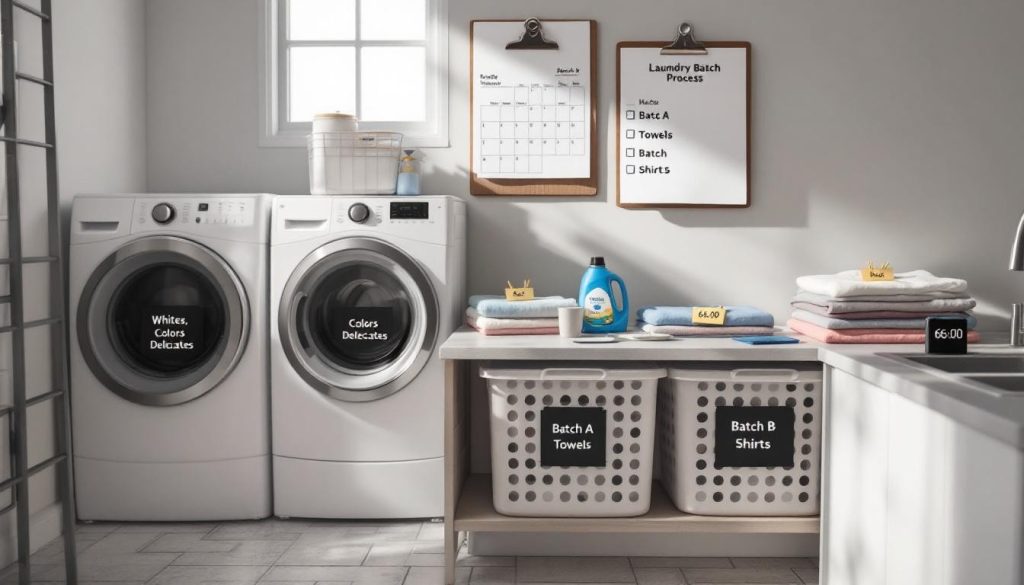
Most households waste hours each week on laundry because they approach it randomly instead of strategically. We at Oasis Laundry know that home laundry batching tips can transform how you manage this weekly chore.
By organizing your washing and drying into intentional batches, you cut down on daily loads and reclaim time for what matters. This guide shows you exactly how to do it.
How Should You Sort Laundry Before Washing?
Start with the Most Important Distinction
The sorting step determines whether your clothes stay in good condition and whether your batching strategy actually saves time. Most people either skip sorting entirely or overcomplicate it. The truth is simpler: sort by what your washing machine can handle in one cycle, not by every possible category. A typical family handles about 4–5 laundry loads per week, and you can cut that number significantly through intelligent grouping. Start with the most important distinction-separate your laundry into whites and everything else. White clothes should always be washed separately to avoid picking up any stray colors.
Group Items by Fabric Type and Weight
Beyond that separation, group items by fabric type and weight within each color category. Cotton towels, for instance, should wash together at a higher temperature than synthetic blends. A 5.2 cubic foot high-efficiency front-loader can easily handle 10 pounds of mixed items like underwear, socks, t-shirts, pajamas, and kitchen cloths in a single load without overcrowding, which means you don’t need to split these into multiple small batches. The key insight: similar wash requirements matter more than minor color variations. A light gray shirt washes fine with navy items because they both need the same water temperature and cycle.
Set Up a Physical Sorting System
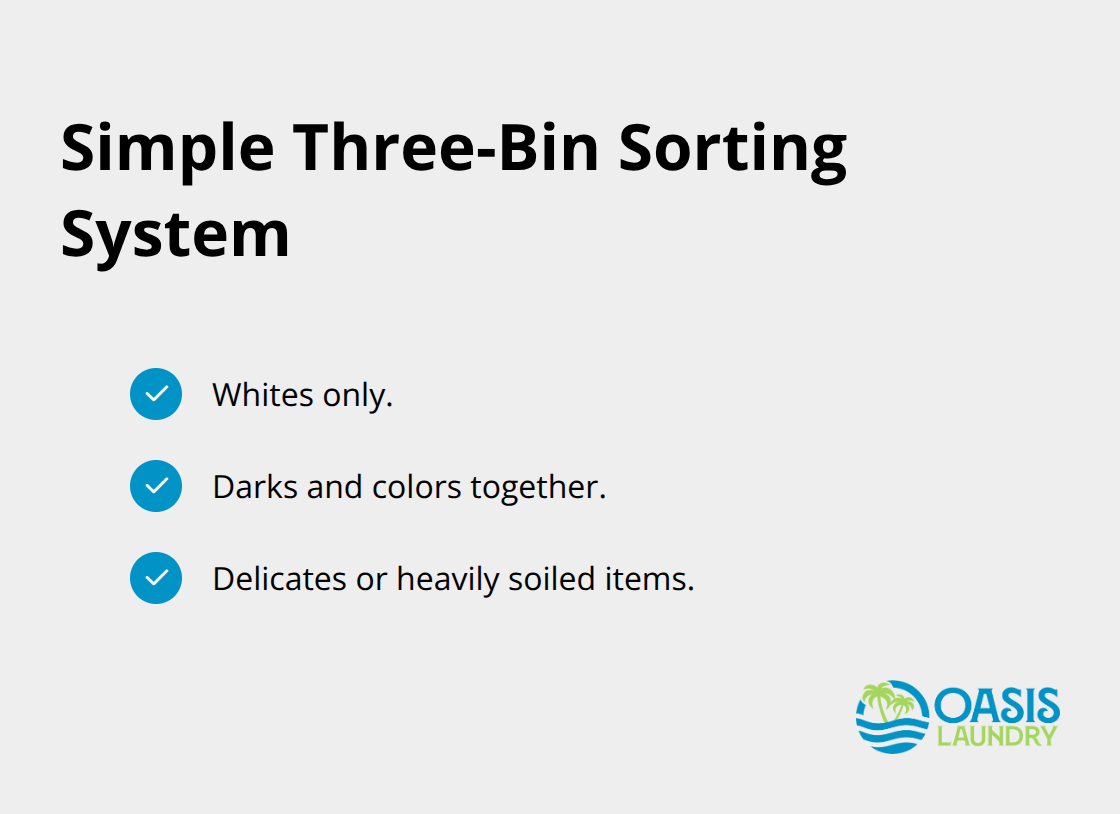
Create a physical sorting system that matches your actual washing rhythm, not an imaginary perfect routine. Set up three dedicated containers in your laundry area: one for whites, one for darks and colors, and one for delicates or heavily soiled items. Label them clearly so household members know where clothes belong without asking. This approach eliminates the mental overhead of deciding where each item goes and prevents the overwhelming pile-sorting sessions that discourage people from starting laundry in the first place.
Implement a Load-Per-Person Strategy
When you designate a load-per-person strategy, as many households do successfully, you reduce sorting complexity significantly because you don’t mix multiple people’s clothes in search of matches. Plan one load per person plus an additional batch for sheets and towels to keep grouping simple. This system prevents tiny socks and small items from becoming endless sorting tasks later, and it lets you move laundry through washing and drying faster because each batch has similar drying times. Don’t mix members’ clothes in the same load to minimize sorting time and mental overhead-the time you save upfront in sorting far outweighs any water savings from one oversized batch. With your sorting system in place, you’re ready to move into the washing and drying phase, where batching truly multiplies your time savings.
How to Wash and Dry Efficiently Without Wasting Water or Money
Run Full Loads to Maximize Efficiency
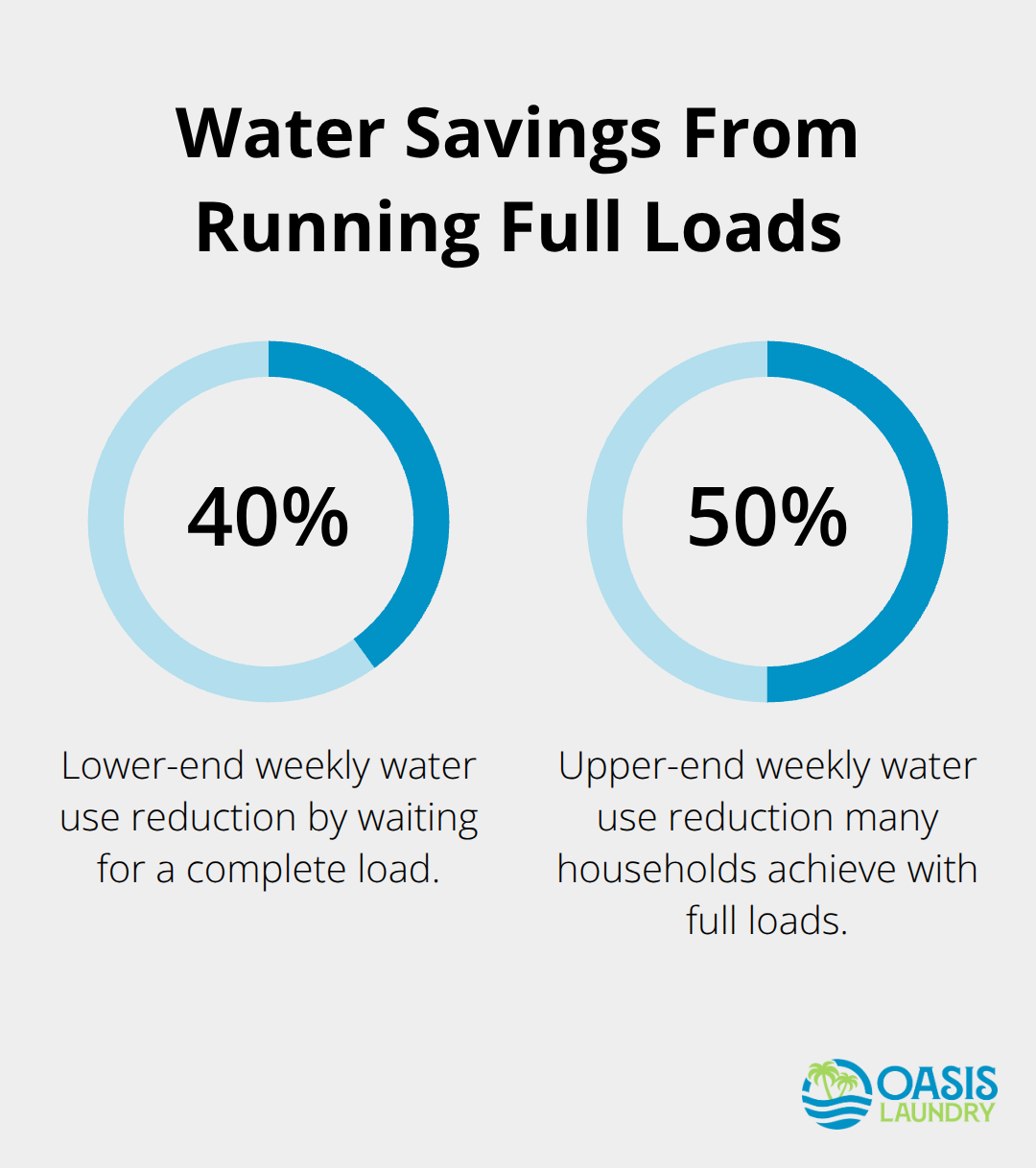
Full loads use roughly the same amount of water and energy as half-full ones, which means running five full loads instead of ten cuts your utility costs significantly. Most households reduce their weekly water usage by 40 to 50 percent simply by waiting until they have a complete load before starting the machine.
A 5.2 cubic foot high-efficiency front-loader processes up to 10 pounds of laundry in a single cycle, so you don’t sacrifice cleanliness when you batch strategically. Partially loaded machines use more energy when compared with fully loaded ones, making this approach essential for cost savings.
Switch to Cold Water for Most Loads
Cold water handles 90 percent of household loads effectively while cutting energy consumption dramatically. Switching from hot to cold water for most loads reduces energy costs per cycle by up to 40 percent according to major appliance manufacturers, and modern detergents work specifically in cold water. The only exceptions are heavily soiled items like kitchen towels or work clothes, which genuinely need hot water to break down grease and dirt. Whites can wash in warm water if they’re visibly dirty, but cold water works fine for regular maintenance washing. Start using cold water for colored clothes, delicates, and lightly soiled items immediately-this single change reduces your monthly utility bill while extending fabric lifespan because cooler temperatures cause less wear and fading.
Separate Items by Drying Time
Drying efficiency comes from grouping items with similar moisture content and drying times. Heavy items like towels and jeans should dry separately from lightweight pieces like t-shirts and underwear because mixed loads either overdry the light items or leave towels damp. A load of bath towels takes 45 to 60 minutes on medium heat, while a load of cotton shirts dries in 25 to 35 minutes. Running them together wastes energy heating the dryer longer than necessary for lighter fabrics. Set up your drying batches the moment you move wet clothes from the washer-don’t let them sit in the machine overnight because wrinkles set in and you’ll spend time ironing instead of organizing.
Maintain Your Dryer for Peak Performance
Clean the lint filter before every load without exception because a clogged filter forces the dryer to work harder, increasing energy use by 30 percent and extending drying time unnecessarily. Hang delicate items on a drying rack instead of machine drying them, which eliminates one category from your dryer batches and prevents shrinkage on expensive clothing.

This separation strategy means your dryer runs fewer total cycles per week while handling more total weight, which lowers your energy costs and gets laundry done faster because you’re not waiting for mixed loads to reach the driest item in the batch. With your washing and drying system optimized, the next step is building a weekly schedule that locks in these efficiencies and removes daily decision-making from the process.
Create a Laundry Schedule That Sticks
Assign Specific Load Types to Specific Days
The most effective laundry schedules assign specific load types to specific days, which eliminates the daily question of what to wash. A five-person household might run Monday through Saturday with adults’ colored clothes on Monday, child one on Tuesday, child two on Wednesday, adults’ whites on Thursday, child three on Friday, and towels plus hand towels on Saturday. This rotation prevents backlogs while distributing work evenly across the week, and it works because family members know exactly when their clothes get washed. The absence of a fixed schedule is precisely why people delay laundry until the pile becomes overwhelming. Research from cleaning communities shows that households without a laundry day cadence accumulate ten or more loads before starting, making the task feel impossible. Once you establish a consistent rhythm, laundry feels lighter because you handle one predictable batch instead of a chaotic backlog.
Build Your Weekly Rotation
Start your schedule with a list of household members and assign each person one dedicated day, then add a separate day for linens and towels to prevent cross-contamination with everyday wear. If strict scheduling doesn’t fit your lifestyle, switch to a load-a-day approach where you wash whatever hamper is fullest that day, which still beats random washing because you batch items by person rather than mixing everyone’s clothes together. Keep your schedule visible on the refrigerator or laundry room wall because consistency requires reinforcement, and the act of printing and posting it increases follow-through significantly. Complete each designated load from start to finish without interruption to maximize efficiency and avoid the mental fatigue of re-sorting partially done batches.
Prepare Clothes the Night Before
Preparation the night before removes friction from your morning routine and prevents the last-minute scramble that derails schedules. Sort tomorrow’s designated load into your washing machine or a staging hamper before bed so you can start the wash immediately when you wake up or have a free moment during the day. This ten-minute evening task eliminates decision fatigue and prevents clothes from sitting in the hamper long enough to wrinkle or develop odors.
Track Progress With a Simple Checklist
A simple checklist tracking which loads you’ve completed each week keeps you accountable and prevents the confusion of wondering whether you already washed a particular person’s clothes. Write down the seven assigned days and check them off as you finish each load, then use the checklist to adjust your schedule if certain days consistently pile up while others feel light. This visual record also helps family members understand the rotation and participate in their assigned laundry day, turning individual chores into a shared family routine rather than one person’s invisible burden.
Final Thoughts
Home laundry batching tips work because they replace chaos with structure and eliminate the mental burden that makes laundry feel overwhelming. Strategic batching protects your clothes by washing items with similar care requirements together, which prevents color bleeding and fabric damage while extending garment lifespan. Consistent routines remove decision fatigue entirely, and household members participate more readily when they know exactly when their clothes get washed.
A typical household saves five to seven hours per week through batching instead of washing randomly, and that time compounds across the year into days you reclaim for yourself and your family. Whites stay bright, darks stay dark, and delicates avoid the wear that comes from washing with heavy towels when you organize loads strategically. The psychological shift from random chaos to organized routine often proves more valuable than the time savings themselves.
If managing home laundry still feels overwhelming despite these strategies, consider whether professional laundry services fit your situation. We at Oasis Laundry offer convenient pickup and next-day delivery for busy households and families, which removes the entire washing and drying process from your schedule. Whether you handle laundry yourself using batching strategies or outsource it entirely, the goal remains the same: reclaim your time and protect your clothes through intentional organization.