


A commercial laundry chute system can transform how your facility handles dirty linens and uniforms. Installing one requires careful planning, proper execution, and ongoing maintenance to keep everything running smoothly.
We at Oasis Laundry have helped countless businesses streamline their laundry operations with the right chute setup. This guide walks you through every step, from initial planning to long-term upkeep.
Planning Your Commercial Laundry Chute Installation
Map Your Building Layout First
The biggest mistake we see businesses make is rushing into installation without understanding their building’s constraints. Before you order a single component, you need a formal blueprint that maps exactly where your chute will run through each floor, how it connects to your collection area, and what obstacles it will encounter. Start by identifying the optimal intake locations-hotels and hospitals typically place one per room or per hallway, while smaller facilities might consolidate to one per floor. The placement decision directly impacts labor efficiency.
A chute positioned two steps from your laundry room saves staff time compared to one requiring a longer walk. Consider whether you need multiple intakes that merge into a single discharge point, which requires careful planning to prevent bottlenecks. Your building’s existing infrastructure matters enormously. Locate all fixed pipes, electrical wiring, and load-bearing walls before finalizing your chute path. Many installations hit unexpected costs because teams discover conflicts with immovable obstacles mid-project.
Choose the Right Chute Specifications
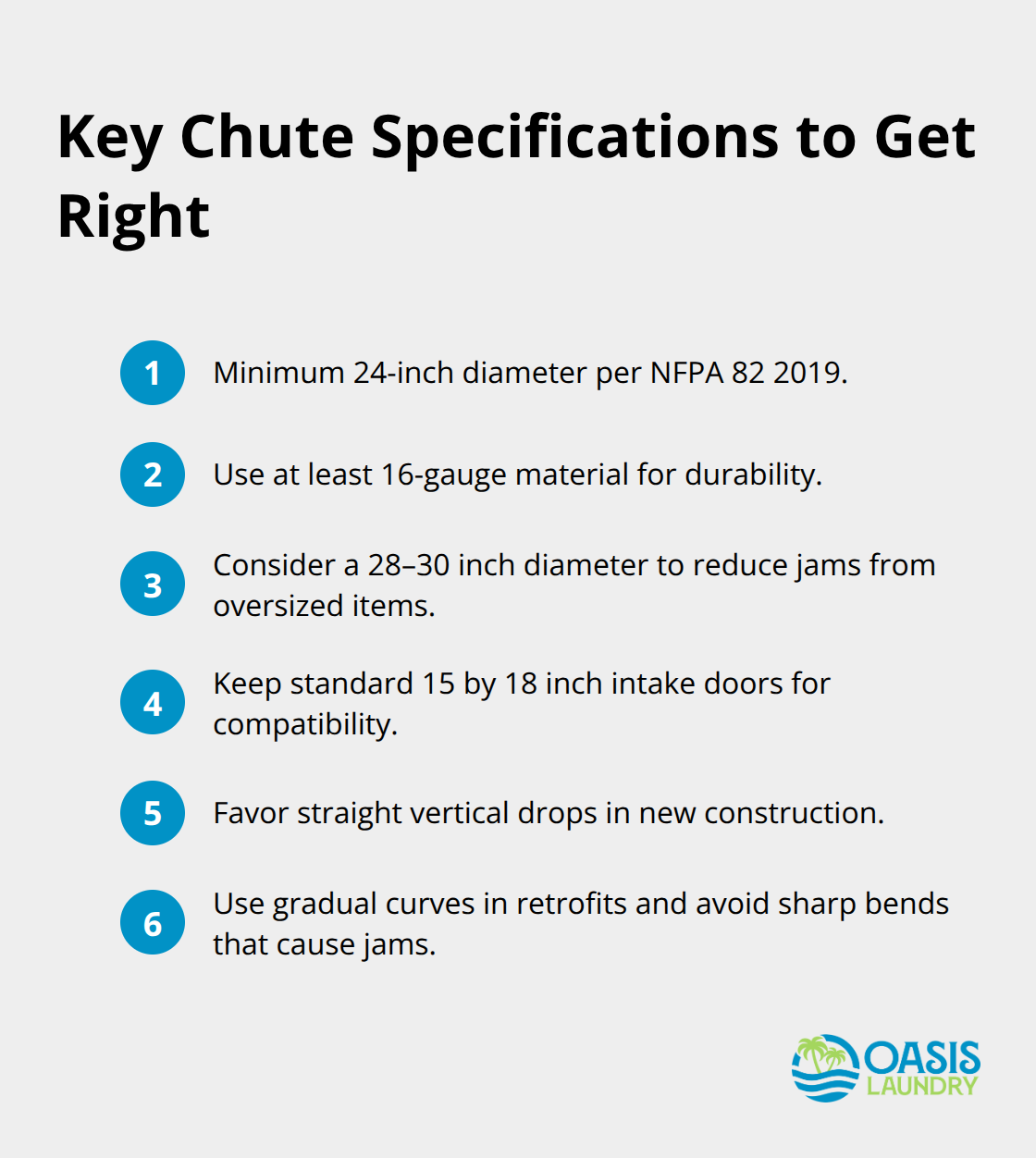
Per NFPA 82 2019 minimum diameter requirements, your chute must meet a minimum diameter of 24 inches (or 22.5 inches square) with at least 16-gauge material, though increasing to 28–30 inches reduces jams from oversized packaging while keeping standard 15 by 18 inch intake doors. Straight vertical drops work best for new construction, but existing buildings often require gradual curves that reduce fabric snagging-avoid sharp bends that create jams and maintenance headaches.
Account for Material and Fire Safety Costs
Budget reality differs significantly from casual online estimates. Commercial installations vary widely based on material selection, scope, and structural modifications required. Sheet metal offers superior durability for high-traffic environments compared to wood-based options that snag fabrics, though professional installers can recommend coatings like high-gloss paint to mitigate fabric damage.
Fire safety compliance adds cost but is non-negotiable-IBC Section 713 requires fire-protection rated intake doors, and NFPA 101 Life Safety Code mandates self-closing or automatic-closing doors with latches. Local building codes may impose additional requirements, and permits are typically necessary. Engage a professional installer early to itemize costs accurately and streamline permit approval rather than discovering compliance issues after construction begins.
Plan Installation Timing and Maintenance
Plan for installation timing to minimize operational disruption in busy facilities. Long-term maintenance budgets should include regular lint and debris cleaning to prevent clogs, professional inspections to verify code adherence, and potential repairs to door mechanisms and seals. With your planning phase complete and specifications locked in, you’re ready to move forward with the actual installation process.
Building and Installing Your Chute System
Prepare Your Site and Gather Tools
Installation success starts with thorough site preparation that most contractors shortcut at their peril. Assemble essential tools before day one: reciprocating saw, drill, stud finder, level, and safety equipment including gloves and goggles. Clear your workspace completely and establish a safety perimeter since you will cut through walls and handle heavy materials.
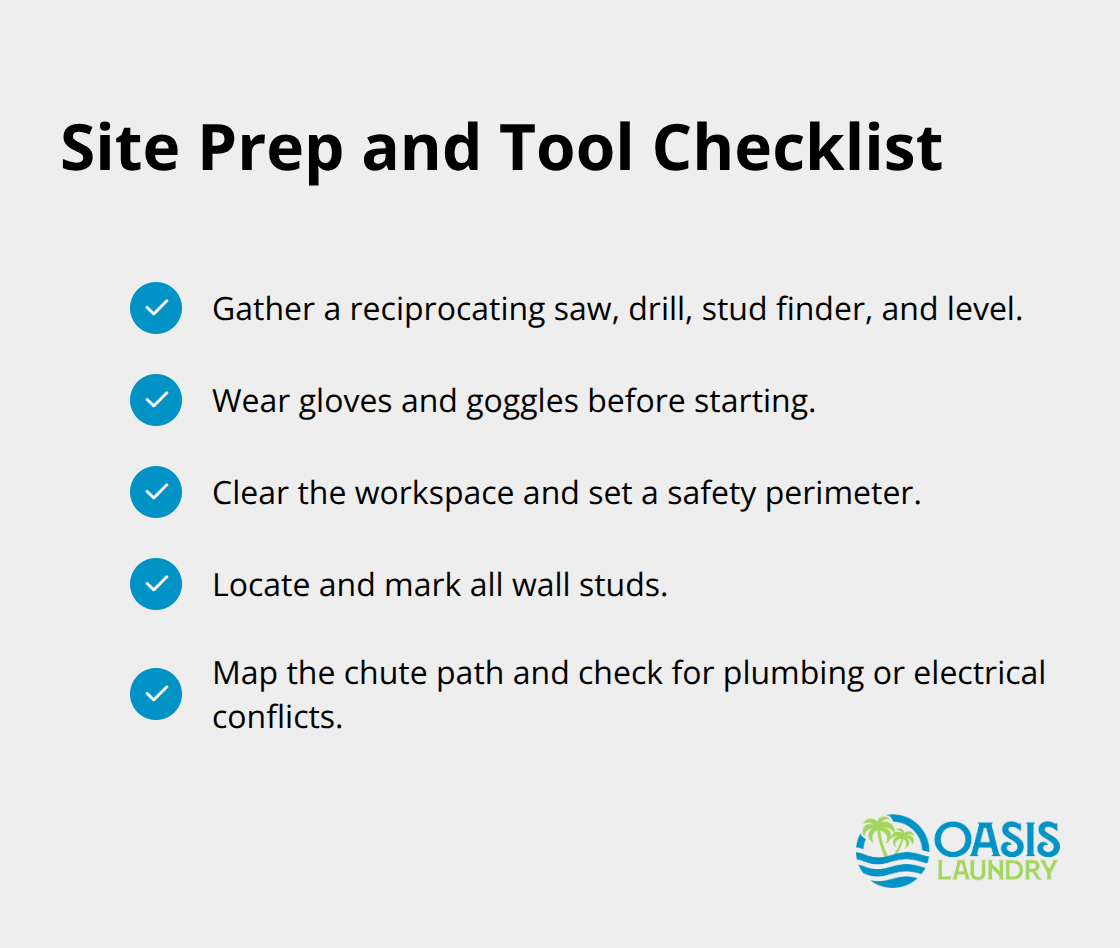
Locate all wall studs with your stud finder and mark them clearly-this step determines whether your chute sits securely or shifts under load. Identify the exact path your chute will follow from top to bottom, checking for any last-minute conflicts with plumbing or electrical lines you may have missed during planning.
Cut Openings with Precision
Precision matters more than speed when you cut openings through floors and walls. Measure twice, cut once, and verify measurements again before making your first cut. Use a reciprocating saw for drywall and wood, but switch to a metal-cutting blade if you encounter unexpected metal studs or bracing. For load-bearing walls, reinforce the area around your chute opening or install the chute within an existing stud bay to distribute structural load properly. Secure chute segments to studs with appropriate fasteners rated for the material weight, checking alignment constantly with your level to ensure the chute remains perfectly plumb from top to bottom. Misalignment causes jams and creates maintenance nightmares that cost far more than taking extra time during installation.
Align, Test, and Seal Components
Test the chute door operation before you seal anything permanently. Doors must swing freely without binding, and hinges should operate smoothly through their full range of motion. Per NFPA 82 Chapter 6, your chute must vent through the roof at full diameter, so plan your roof opening carefully to prevent water leaks. Seal all gaps around the chute with fire-rated caulk or foam to prevent pest entry and air leakage. Connect your discharge opening to collection bins positioned directly below, ensuring the bin sits securely in place and the chute opening aligns perfectly with the bin opening to prevent laundry from spilling onto the floor.
Position Bins for Workflow Efficiency
For facilities with sorting requirements, position your bins near your sorting station so staff process linens immediately without additional handling steps that waste time and increase injury risk. Proper bin placement eliminates unnecessary movement and keeps your laundry operation running at peak efficiency. With your chute system installed and operational, maintaining it properly becomes your next priority to protect your investment and keep staff safe.
Maintenance and Safety Best Practices
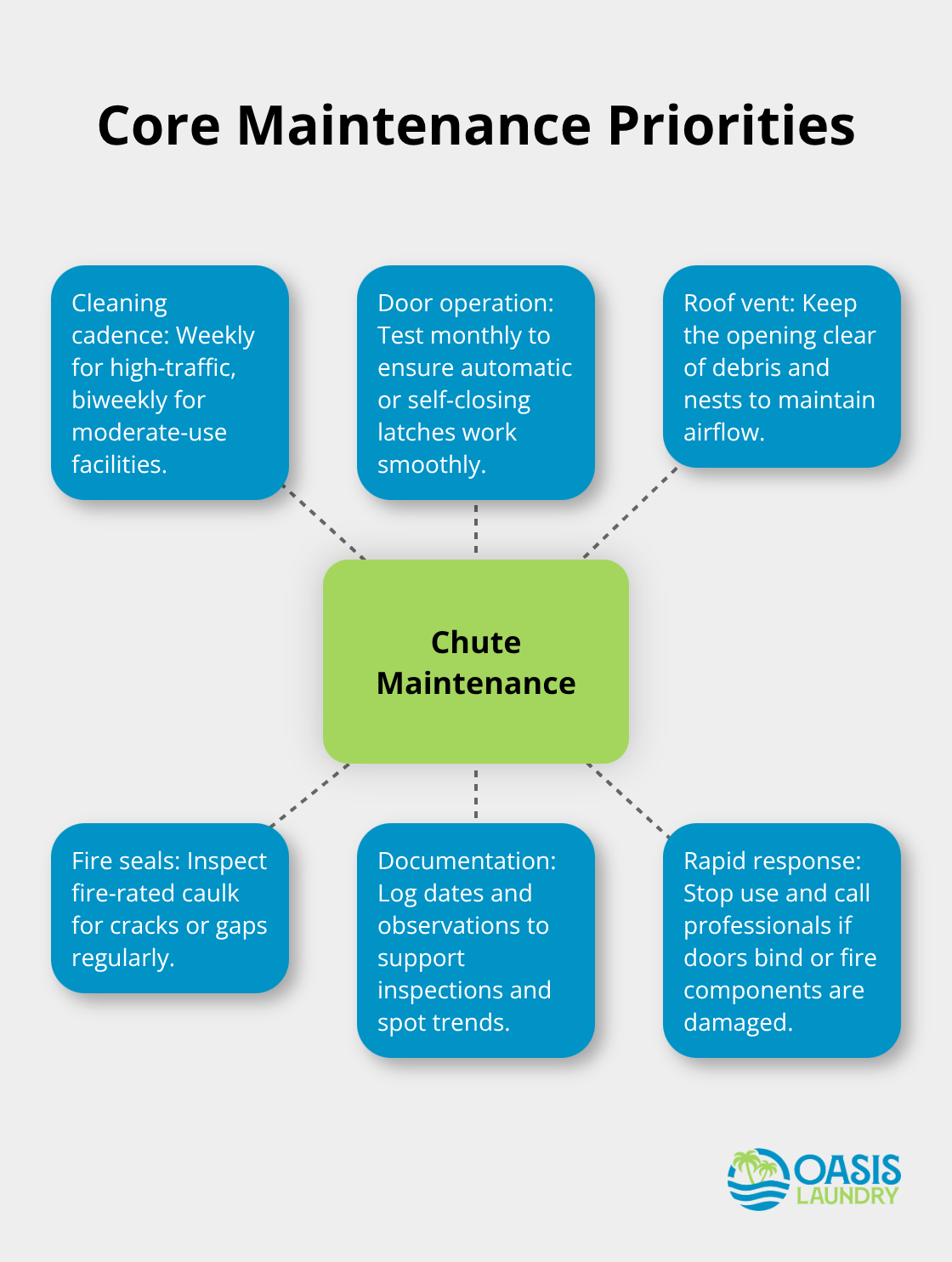
Your chute system demands consistent attention to prevent costly failures and safety hazards. Facilities that ignore maintenance schedules face jams, odor problems, and compliance violations that disrupt operations far worse than spending thirty minutes monthly on upkeep. Start with a cleaning schedule tied to your facility’s volume: high-traffic hotels and hospitals should clean weekly, while moderate-use facilities need cleaning every two weeks.
Clean Your Chute Regularly and Correctly
Lint and debris accumulate inside the chute shaft and reduce efficiency. Use a reciprocating brush or vacuum designed for chute cleaning to remove buildup thoroughly. Never use water-based cleaning methods that damage door mechanisms or control panels. Avoid wetting pneumatic door components since moisture causes malfunctions. Document every cleaning session with dates and observations about chute performance-this record protects you during inspections and helps identify emerging problems before they escalate.
Test Door Operation and Fire Safety Components
Fire safety compliance is non-negotiable and requires professional verification at least annually. NFPA 82 mandates that intake doors maintain proper fire ratings and close automatically or self-close with functional latches. Test door operation monthly to confirm smooth closing without binding. Your roof vent opening must remain clear of debris and bird nests that restrict airflow. All fire-rated caulk around the chute shaft needs visual inspection for cracks or gaps that compromise compartmentalization.
Address Jams and Performance Issues Promptly
Common jams result from oversized items forced into standard openings or accumulated lint restricting flow. Post clear usage rules near trash room doors explaining what belongs in the chute and what does not. If you discover issues like doors that stick, hinges that bind, or visible damage to fire-rated components, stop using the chute immediately and contact a professional service provider. They offer compliance inspections, emergency repairs, and maintenance packages specifically designed to keep systems code-compliant.
Evaluate Persistent Problems and Upgrade When Needed
If jams occur repeatedly despite cleaning, the chute diameter may be undersized for your facility’s actual usage patterns. This signals you need a professional assessment to determine whether upgrading to a larger diameter or adjusting intake placement would solve the problem permanently rather than treating symptoms with repeated maintenance calls.
Final Thoughts
Installing a commercial laundry chute system represents a significant investment in your facility’s operational efficiency and staff safety. The planning phase determines success more than any other factor-taking time to map your building layout, verify code requirements, and budget accurately prevents costly mistakes that plague rushed installations. Your chute specifications must match your actual volume and building constraints, not generic industry standards that may underestimate or overestimate your needs.
The installation itself demands precision and attention to structural integrity. Cutting corners on alignment, fire safety compliance, or material quality creates problems that multiply over time. A properly installed commercial laundry chute reduces labor costs by eliminating unnecessary trips up and down stairs, improves hygiene by segregating dirty linens from shared spaces, and protects staff from injuries caused by carrying heavy loads manually.
Long-term success depends entirely on consistent maintenance-thirty minutes of preventive work monthly costs far less than emergency repairs or operational shutdowns caused by neglect. Connect with professionals who understand both the technical requirements and the operational realities of your specific facility type, and explore how Oasis Laundry can support your commercial operations with pickup and delivery services, textile restoration, or facility consultation tailored to your business needs.