


Laundry folklore has been passed down through generations, often leading to misconceptions about proper washing techniques. At Oasis Laundry, we’ve encountered numerous myths that can impact the cleanliness and longevity of your clothes.
In this post, we’ll debunk some common laundry legends and provide you with accurate, science-based information to improve your washing routines.
Is Hot Water Always Best for Laundry?
The Truth About Water Temperature
The belief that hot water is the ultimate cleaning solution for laundry is more myth than fact. Water temperature plays a nuanced role in the cleaning process, and hot water isn’t always the best choice. The American Cleaning Institute reports that modern detergents work effectively in cold water, making hot water unnecessary for most loads.
When to Use Different Water Temperatures
Hot water (130°F or above) works best for heavily soiled items, whites, and items that need sanitizing. It kills bacteria and removes tough stains like grease. However, it can cause shrinkage, color fading, and set certain types of stains.
Warm water (90°F to 110°F) serves as a good middle ground for most everyday laundry. It cleans effectively without the risks associated with hot water.
Cold water (80°F or below) is ideal for delicate fabrics, dark or bright colors, and most everyday loads. It treats clothes gently, prevents color bleeding, and saves energy.
The Benefits of Cold Water Washing
Switching to cold water washing leads to significant energy savings. ENERGY STAR certified clothes washers use about 20% less energy and about 30% less water than regular washers. Cold water washing also reduces your carbon footprint, making it an environmentally friendly choice.

Cold water preserves fabric quality better than hot water. It reduces the likelihood of shrinkage or fading, and it treats elastic and other synthetic fibers more gently. This means your clothes can last longer (saving you money in the long run).
Practical Tips for Water Temperature Selection
- Use cold water for most of your laundry needs.
- Pre-treat stubborn stains before washing in cold water.
- Reserve hot water for sanitizing items or removing tough, oily stains.
- Check garment care labels for specific temperature recommendations.
Cold water washing proves effective for most laundry tasks while protecting your clothes and the environment. However, the next myth we’ll address might surprise you even more: the idea that more detergent equals cleaner clothes.
Is More Detergent Better for Cleaning?
The Myth of Detergent Overuse
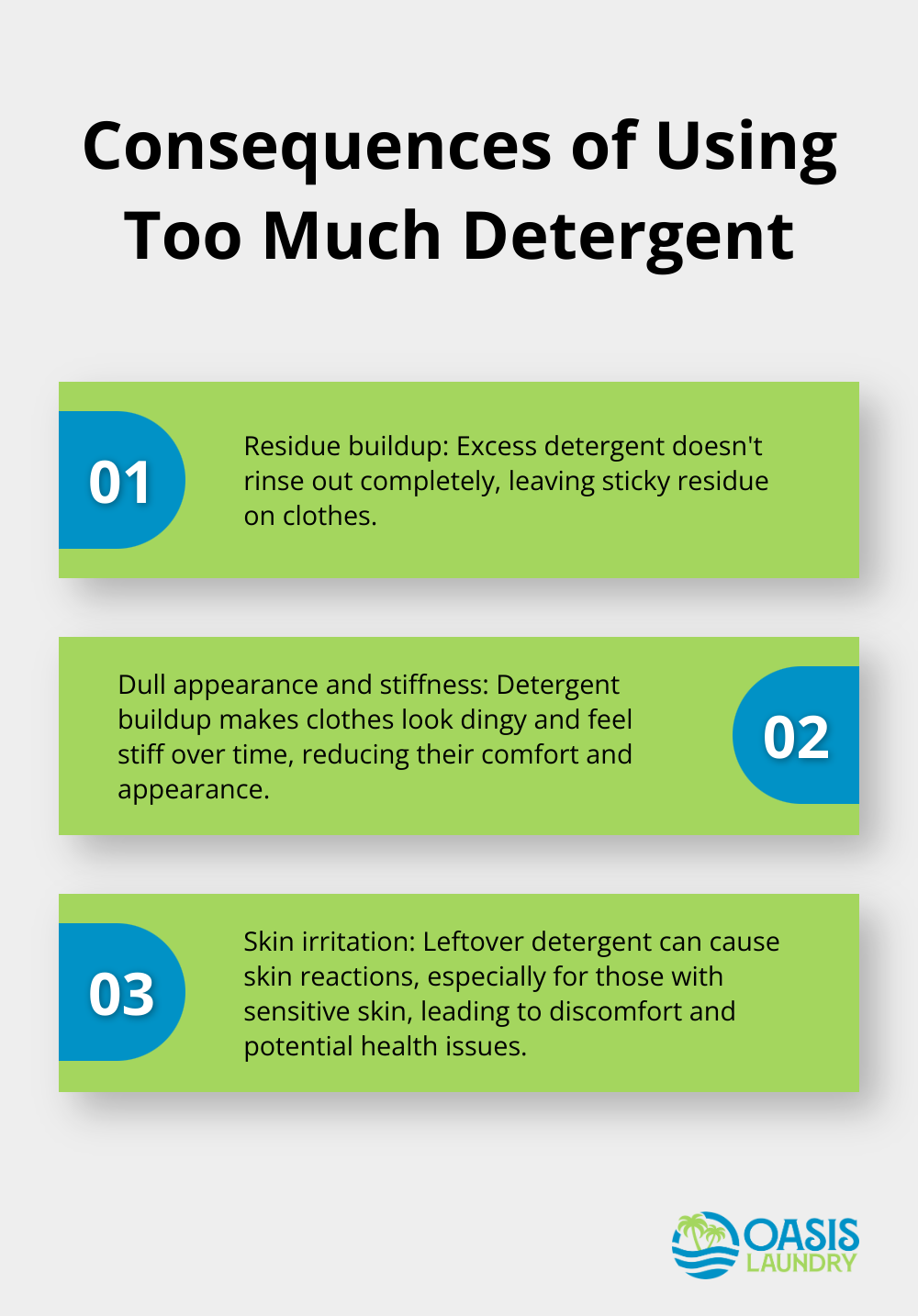
Many people believe that using more detergent leads to cleaner clothes. This misconception can result in negative consequences for both laundry and washing machines.
Understanding Detergent Concentration
Detergents break down dirt and oils in clothes. However, washing machines have a limit to the amount of detergent they can effectively use. The American Cleaning Institute emphasizes the importance of understanding the “big picture” of overcoming gross pollution and factual evaluation when it comes to detergent use.
Negative Effects of Detergent Overuse
Determining the Right Amount
To use the correct amount of detergent:
- Read the label for dosage instructions.
- Consider load size and soil level.
- Use the provided measuring cap.
- For high-efficiency (HE) washers, use HE detergent and follow specific guidelines.
Try using less detergent than you think you need. If clothes don’t come out clean, gradually increase the amount until you find the right balance.
Water Hardness and Detergent Effectiveness
Local water hardness affects detergent effectiveness. Hard water requires more detergent to achieve the same cleaning power as soft water. Contact your local water utility for information about your water hardness.
Understanding the science behind detergent use and following these guidelines will result in cleaner clothes and a longer-lasting washing machine. Now, let’s explore another common laundry myth: the necessity of fabric softeners for achieving soft clothes.
Are Fabric Softeners Necessary for Soft Clothes?
The Myth of Fabric Softener Necessity
Fabric softeners have long been marketed as essential for achieving soft, fluffy laundry. However, this widely held belief is more myth than reality. Fabric softeners often do more harm than good, and better alternatives exist for achieving soft, comfortable clothes.
Drawbacks of Fabric Softeners
Fabric softeners work by coating fibers with a thin, lubricating film. While this can make clothes feel softer initially, it comes with several downsides:
- Reduced absorbency: The waxy coating left by fabric softeners can make towels and athletic wear less absorbent. This coating can reduce the moisture-wicking properties of performance fabrics.
- Skin irritation: Many fabric softeners contain chemicals that can cause allergic reactions or skin irritation, especially in people with sensitive skin or conditions like eczema.
- Environmental impact: Fabric softeners often contain non-biodegradable ingredients that can harm aquatic life when they enter waterways.
- Decreased flame resistance: The U.S. Consumer Product Safety Commission warns that fabric softeners can reduce the flame resistance of children’s sleepwear, potentially compromising safety.
Natural Alternatives for Soft Laundry
Several effective, eco-friendly alternatives achieve soft clothes without the drawbacks of commercial fabric softeners:
- White vinegar: Add 1/2 cup of white vinegar to the rinse cycle. It naturally softens fabrics and helps remove soap residue without leaving a coating. The vinegar smell dissipates as clothes dry.
- Wool dryer balls: These reusable balls help separate clothes in the dryer, reducing static and wrinkles while softening fabrics naturally. They can also cut drying time by 14% to 25%, saving energy.
- Baking soda: Add 1/2 cup of baking soda to the wash cycle. It softens water and clothes while helping to remove odors.

Tips for Naturally Soft Laundry
Several laundry practices can help keep your clothes soft:
- Don’t overload the washer: Clothes need room to move freely for proper cleaning and to avoid excessive wrinkling.
- Use the right water temperature: Cold water is often sufficient and helps prevent shrinkage and fiber damage that can lead to stiffness.
- Avoid over-drying: Remove clothes from the dryer while still slightly damp to prevent over-drying, which can lead to stiffness and static.
- Line dry when possible: Air-drying clothes (especially outdoors) can make them feel fresher and softer naturally.
These natural methods and practices will help you achieve soft, comfortable laundry without relying on commercial fabric softeners. Your clothes will feel great, and you’ll make a more environmentally friendly choice.
Final Thoughts
Laundry folklore has influenced washing habits for generations, but facts now challenge these long-held beliefs. Cold water washing proves as effective as hot water for most loads, while using the right amount of detergent prevents residue buildup and machine damage. Natural alternatives to fabric softeners offer better results for both clothes and the environment.
These updated laundry practices will improve your clothes’ longevity and reduce your environmental impact. You’ll likely see improvements in both your wardrobe and utility bills when you question outdated laundry myths. The laundry care world evolves constantly, and staying informed helps us make smarter choices for our clothes and planet.
We at Oasis Laundry commit to providing eco-friendly laundry solutions that align with these best practices. Our services cater to residential and commercial clients (with convenient pickup and delivery options). Whether you’re a busy professional or a business owner, we have the expertise to handle your laundry needs efficiently and sustainably.